A team from Italy and Iraq found clay tablets. The find was in central Iraq. The writing on them is cuneiform. The page says cuneiform is one of the earliest systems of writing. With the tablets, the team found clay covers and seals.
The team came from the Universities of Pisa and Siena. They worked with the Iraqi University of Al-Qadisiyyah. The site is Tell as-Sadoum, in south-central Iraq. The page says the site covers 50 hectares. It lies east of Najaf, on a branch of the Euphrates. It has been identified as the city of Marad.
The page says Marad was an important city. It was established in the 3rd millennium BC. It was once part of the Akkadian Empire. It stood on a hill. People lived there until the Neo-Babylonian period, in the 1st millennium BC. Digs have found a large temple. They have found residential districts. They have found a large manufacturing centre.
The tablets were in the manufacturing district, with many pottery fragments. The page says the team found a hundred or so fragments. Those fragments carry this script. They are believed to date to the 2nd millennium BC. The page says that is the Paleo-Babylonian Empire. It is the time of Hammurabi. Eight tablets are intact, or only a little damaged. All of those carry the script.
The texts are not all the same kind. Some are letters. Some are other official papers. Some are about trade. A sales contract was found. A purchase agreement was found. Some are bureaucratic. Some are about legal disputes.
Professor Anacleto D’Agostino was on the dig. He is at the University of Pisa. He said the tablets show the wealth of the city. He said they show a lively economic and administrative life. A few tablets list names of kings and of other cities. The page says these could help with the political history of the city.
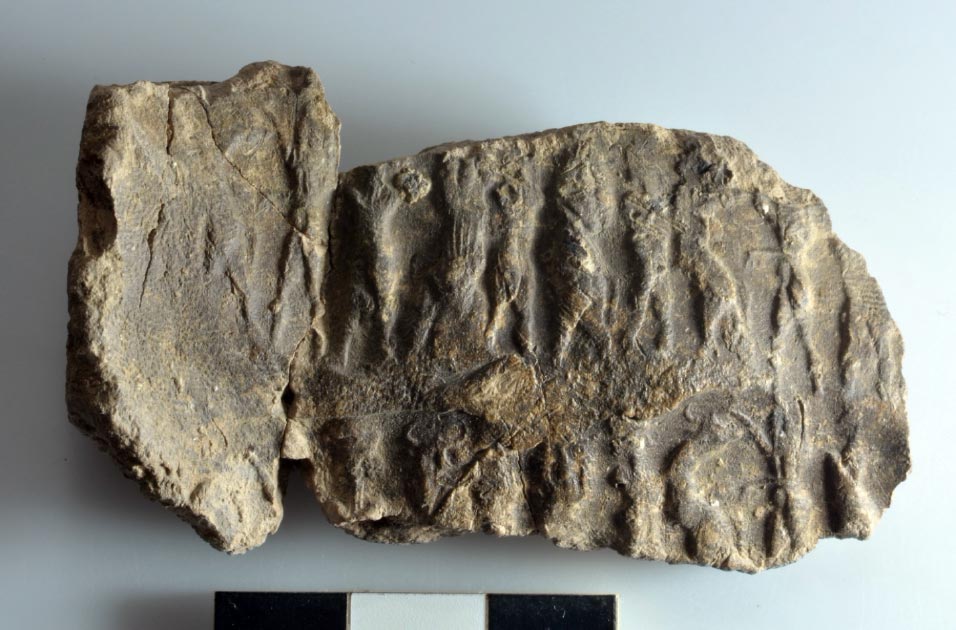
Clay covers were found with the texts. The page says they are like envelopes. The tablets were kept in them. Three covers are nearly intact. Many are made of thin strips of clay. The subject inside is often written on the cover. Seals were pressed in. They show names and pictures. They were used to authenticate the writing.
The page says about ninety cretulae were found. The page says these are blocks of clay. They have seal or string impressions. They were used to secure the containers. Some seals were set with semi-precious stones. The page says these were the personal marks of prominent people. Those people were probably members of the administrative and commercial elite.
The page says the pictures were often made with great care by skilful craftsmen. Some show monarchs, or possibly heroes, fighting wild animals. Some show Mesopotamian deities, mythological creatures, and animals. The page says this skill shows the sophistication of the culture at Marad. These are pictures. They are not events the dig proved.
Professor D’Agostino said the team expected to dig again through 2020. The tablets still had to be read in full.
What was found: clay tablets and fragments in cuneiform. Also three nearly intact clay covers, and about ninety cretulae. Where: the manufacturing district at Tell as-Sadoum. The site is identified as Marad. It lies east of Najaf, on a branch of the Euphrates, in south-central Iraq. When: the tablets are believed to date to the 2nd millennium BC. The page does not give the day of the dig. The article date is 4 December 2019.
From an Ancient Origins article by Ed Whelan, 4 December 2019.
On 4 December 2019, Ancient Origins reported a find from Iraq. A team of archaeologists from Italy and Iraq had been digging at a site called Tell as-Sadoum, in south-central Iraq. The team came from the University of Pisa and the University of Siena, working with specialists from the Iraqi University of Al-Qadisiyyah. The site covers 50 hectares. It lies east of the city of Najaf, on a branch of the Euphrates River. It has been identified as the ancient city of Marad. Known.
Marad was an important city. It was founded in the 3rd millennium BC, which means sometime between 3000 and 2001 BC. It was once part of the Akkadian Empire. It stood on a hill, and people lived there until the Neo-Babylonian period in the 1st millennium BC. Digs have uncovered a large temple, some districts where people lived, and a large manufacturing area, where things were made. Known as the history the report gives.
The team found clay tablets in the manufacturing district, along with many broken pieces of pottery. The tablets are written in cuneiform, one of the earliest systems of writing. The report says the team found a hundred or so fragments with cuneiform writing. Eight tablets are whole or only slightly damaged. Known.
What do the tablets say? They cover many parts of city life. Some are letters and other official documents. Some are about business, including a sales contract and a purchase agreement. Others are about running the city, and some even deal with legal disputes. A few tablets list the names of kings and of other cities. These could help historians work out the political history of Marad. Professor Anacleto D'Agostino of the University of Pisa, who took part in the dig, said "the tablets bear witness to the wealth and the lively economic and administrative life" of the ancient city. Known.
The team also found many pieces of clay covers. The report compares them to envelopes, because the tablets were kept inside them. Three of these envelopes are nearly whole. Many were made from thin strips of clay. The subject of the tablet inside was often written on the outside, just as you might label a parcel. Known.
How did people in Marad show that a message was genuine? They used seals. A seal was a small carved object pressed into wet clay to leave a picture or a name. The envelopes often carry seal marks, to show the contents were genuine. The team also found about ninety cretulae. The report explains these are blocks of clay with seal or string marks, used to close and secure containers. Some seals were decorated with semi-precious stones. The report says these were the personal marks of important people, probably members of the city's government and business elite. Known.
The seal pictures were often carved with great care by skilled craftsmen. Some show kings, or possibly heroes, fighting wild animals. Others show Mesopotamian gods, mythological creatures and animals. The gods and creatures are pictures, not events that happened. Known as pictures. Myth as stories.
How many tablets were there? The report's first line says the team found "hundreds" of cuneiform tablets. Further down, it gives a smaller count: "a hundred or so fragments", with eight tablets whole or nearly whole. The University of Pisa's own news report, from 25 November 2019, has the same mismatch. Its subtitle speaks of "Hundreds of texts", but its main text says "a hundred or so fragments with cuneiform script", "eight of which intact or almost". So the careful count is about a hundred fragments, and "hundreds" is Debated. The report also says the tablets are "believed" to date to the 2nd millennium BC, the time of Hammurabi. The Pisa report dates them to the beginning of that millennium, and D'Agostino names the Isin-Larsa and Old Babylonian periods. The University of Pisa ran the dig, so it is the team's own view, not an independent check. The report's lead also calls this one of the most important finds of its kind in many years, without giving a comparison. Debated.
The tablets were still being studied, so not all their contents were known. D'Agostino said the team hoped "to continue the project through 2020 with a new mission in the field". The report does not say what happened next. Known.
Sources: - University of Pisa, "'Envelopes' made of clay have been unearthed in the ancient Mesopotamian city of Marad during the University of Pisa's archaeological mission in Iraq", University of Pisa English news, 25 November 2019. https://old.unipi.it/index.php/english-news/item/16829
Sources:
https://www.ancient-origins.net/news-history-archaeology/mesopotamian-cuneiform-tablets-0012947