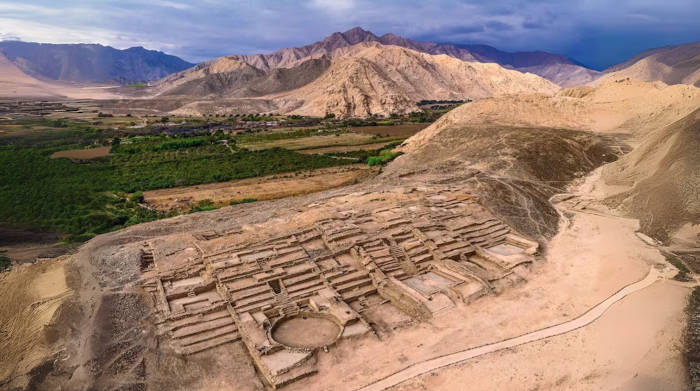
A team has opened a city called Peñico, in Peru. The dig took eight years. The article calls it 3,500 years old. It dates to about 1800 to 1500 BC. It is in Barranca province. It stands on a hill terrace, 600 metres above the sea. The article also says 1,969 feet.
Dr Ruth Shady led the work. She found the city of Caral in the 1990s. She leads the Caral Archaeological Zone. She announced Peñico at Peru's Ministry of Culture.
She said the new centre followed Caral. Its place linked the coast and the highlands of Supe and Huaura. It also linked the Andean-Amazonian lands. She told Reuters the place was good for trade. The trade was with the coast, the highlands, and the jungle.
The city sits on a rock terrace by the Supe River. Hills nearby reach 1,000 metres. The article also says 3,280 feet. The article gives three reasons for the spot. To make the buildings look grand. To guard against floods and landslides. To help people meet and trade.
Marco Machacuay works at the ministry. He said Peñico matters because it carries on Caral society.
The team has named 18 buildings. Some are big public buildings. Some are small ones. Some are temples. Some are homes. One part is called B2. It sits in the big building called B1-B3. Its walls show pututus in raised pictures. The article says pututus are conch shell trumpets. The sound carries a long way. They are carved in a four-sided hall.
The article says what the trumpet did in old Andean life. It could call a meeting. It could announce a big event. It was a sign of rank. The article also says the trumpets were gifts to gods, to give thanks. That is a belief. The article does not describe a rite at this city.
The team found clay figures of people, of animals, and of objects used in rites. They found bead necklaces. The article names the materials. They are Spondylus shells. They are Argopecten purpuratus. They are Felicioliva peruviana. They are rhodochrosite and chrysocolla. They are animal bone and clay. They also found stone tools. These are grinders, hammers, crushers, anvils, and grinding stones.
Caral is in the Supe Valley nearby. The article says it began around 3000 BC. It calls Caral the oldest known civilisation in the Americas. It says Caral lived at the same time as early cities in Egypt, India, Sumer, and China. It says Caral grew on its own. It had 32 big buildings, with large pyramids. It had water for fields, and towns. It lasted more than a thousand years. Then it faded.
Dr Shady said the new site shows what came after Caral. She said climate change broke Caral. The article says the people of Peñico stayed in the old trade links after Caral's main centres faded.
Ministry staff have an idea about why Peñico had high rank. It may link to hematite. The article says that is a mineral used for red colour. It calls the idea a hypothesis.
The site will open to the public. The first Peñico Raymi is set for 12 July 2025. It starts at 10:00 in the morning. There will be a ceremony for Pachamama. The article calls her Mother Earth. Local groups will be thanked. There will be an artistic festival.
The site is about four and a half hours from Lima. Visitors use the Caral road. They take the Supe Valley turn. That is the Caral-Ámbar route. It leaves at kilometre 184 of the North Pan-American Highway. Then they go 34 kilometres to Peñico.
Dr Shady named other sites people can visit. They are Caral, the fishing city of Áspero, and the farm and fishing city of Vichama. Peñico now joins that list. She called it a city of coming together.
What was found: the city of Peñico, with 18 buildings, a hall of pututu carvings, clay figures, beads, and stone tools. Where: Barranca province, in the north highlands of Peru, by the Supe River, 600 metres above the sea. When: about 1800 to 1500 BC, which the article calls 3,500 years old. The dig took eight years. The article does not give the day of the first find. It is dated 8 July 2025.
From an Ancient Origins article by Gary Manners, 8 July 2025.
On 8 July 2025, Ancient Origins reported that archaeologists in Peru had unveiled an ancient city called Peñico. It took eight years of work. The city dates to about 1800 to 1500 BC, so it is about 3,500 years old. It lies in Barranca province, in Peru's northern highlands. It stands about 600 metres (1,969 ft) above sea level. It is built on a natural terrace beside the Supe River. The hills around it reach 1,000 metres (3,280 ft). Known.
The work was led by Dr Ruth Shady, who directs the Caral Archaeological Zone. She announced the find at Peru's Ministry of Culture. In the 1990s she led the digs at Caral, a much older city nearby. Known.
To understand Peñico, you need to know about Caral. The report says Caral, in the nearby Supe Valley, was founded around 3000 BC. It calls Caral the oldest known civilisation in the Americas. Caral lived at the same time as early civilisations in Egypt, India, Sumer and China. Caral had 32 monumental buildings, including large pyramids, as well as irrigated farms and towns. It flourished for more than a thousand years, then declined. Dr Shady said Peñico helps explain "what became of the Caral civilization after it was decimated by climate change". Known as the history the report gives.
Why build a city here? Dr Shady told the Reuters news agency that Peñico was "situated in a strategic location for trade, for exchange with societies from the coast, the highlands and the jungle". The report says the spot was chosen for three reasons: to make the buildings look grand, to protect them from floods and landslides, and to help different communities meet and trade. Marco Machacuay, a researcher at the Ministry of Culture, said Peñico matters because it continues the society of Caral. The report says the people of Peñico kept taking part in the old trade networks after Caral's main centres declined. Known.
The team has identified 18 structures, including public buildings, temples and homes. In one large public building, called B1-B3, there is a section called B2. Its four-sided hall has carvings in relief of pututus, which are conch-shell trumpets. The report says their sound carries a long way. In the Andes they were used to call meetings, to announce important events and to show a person's high status. Known.
The report also says pututus were offerings to the gods, to give thanks. That is a belief about the trumpets. The report does not describe any ceremony taking place at Peñico. Myth, as a belief.
How do archaeologists know this was a place of trade? Look at the objects. The team found clay sculptures of human figures, animal shapes and ceremonial objects. They found bead necklaces. These were made from many materials: Spondylus shells, two other kinds of seashell called Argopecten purpuratus and Felicioliva peruviana, the minerals rhodochrosite and chrysocolla, animal bone and clay. Several of these are seashells, yet the city stands far up in the hills. The report does not say where each material came from. The team also found stone tools, including grinders, hammers, crushers, anvils and grinding stones. Known for the finds. Trade is the team's reading of them.
The site was to open to visitors. The report announced the first Peñico Raymi, a festival on 12 July 2025. It would include a ceremony to honour Pachamama, Mother Earth, and an arts festival. This is a modern event. Pachamama is named for that planned ceremony, not as a being in the ancient city. Peñico is about four and a half hours by road from Lima. Dr Shady called it "this city of integration", a city of coming together. Known.
Why was Peñico so important? Ministry of Culture researchers have an idea. They propose that its prestige may have come from hematite. Hematite is a mineral used to make red pigment. The report says red held high symbolic importance in Andean beliefs, and it calls this idea a hypothesis. CNN, reporting on 8 July 2025 from the ministry's press release, said the city's prestige "may have been tied to its role in the trade of hematite". Both use "may". Neither gives evidence such as hematite found at the site. So the hematite idea is Debated. The report also says Caral grew "in complete isolation" from other early civilisations. The BBC, on 6 July 2025, said Caral "is believed to have developed in isolation". The BBC's word "believed" is more careful, so isolation is Debated too.
Sources: - Olivia Kemp, "Ancient Peruvian city more than 3,000 years old unveiled", CNN, 8 July 2025. https://www.cnn.com/2025/07/08/science/penico-ancient-city-peru-scli-intl - Jessica Rawnsley, "Archaeologists discover 3,500-year-old city in Peru", BBC News, 6 July 2025. https://www.bbc.com/news/articles/c07dmx38kyeo
Sources:
https://www.ancient-origins.net/news-history-archaeology/penico-ancient-city-peru-0022249