Roman concrete is one reason so many Roman buildings still stand. A new study shows one way it was made. Researchers from the Massachusetts Institute of Technology led the work. It was published in the journal Nature Communications. Ray Laurence wrote the article. It first appeared in The Conversation. Ancient Origins ran it on 11 December 2025.
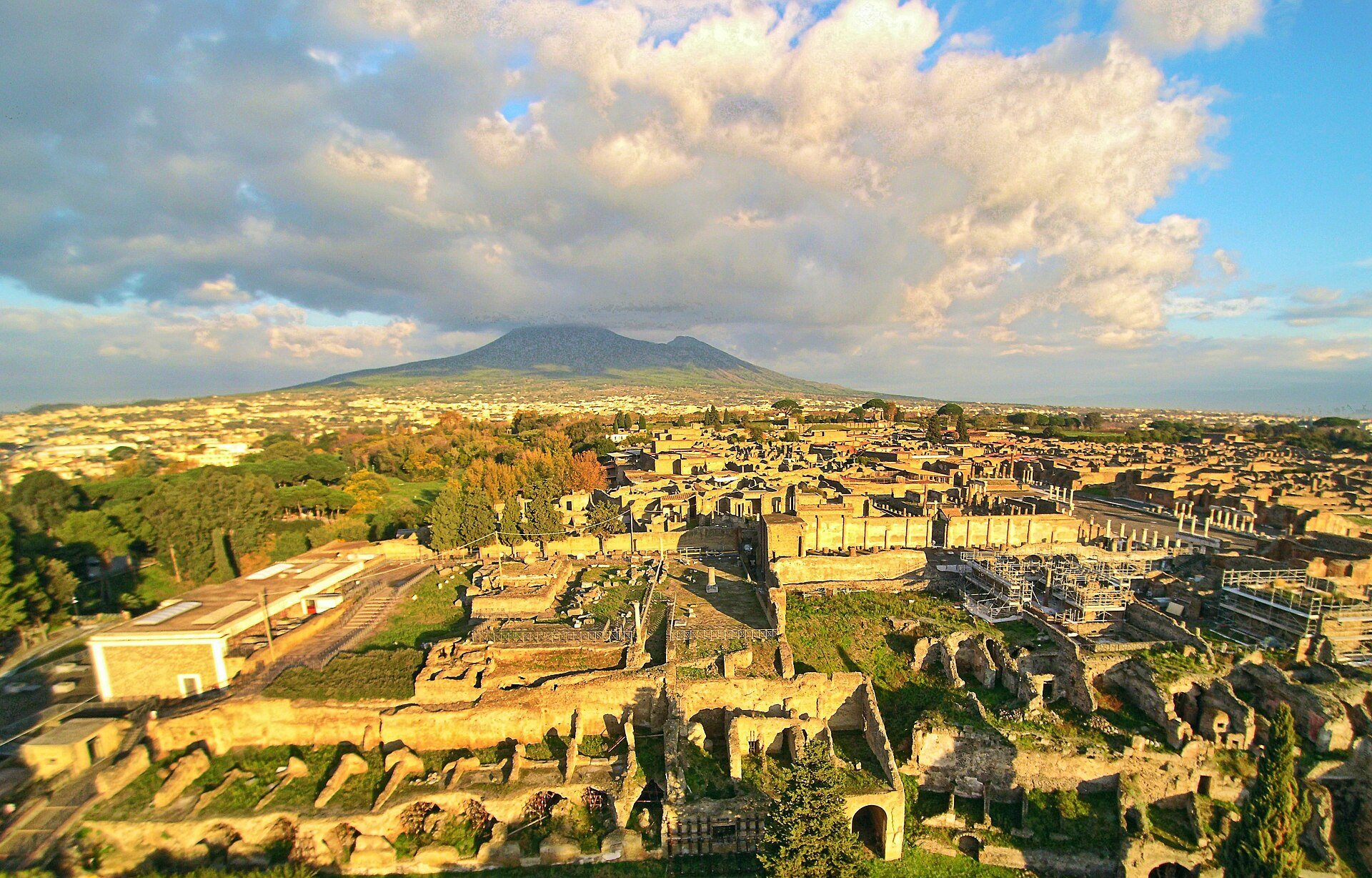
The clues come from Pompeii. Workers were mending a house when Mount Vesuvius erupted in 79 CE. They left a building site behind. In partly built rooms, tiles were lined up for reuse. Blocks of tuff were stored too. Wine jars called amphorae had been used again, to carry building materials. The article says amphorae are wine containers.
Most important, dry material was set out before anyone mixed it. That dry mix is the focus of the study. The team could see the ingredients before water was added.
They studied the chemistry of the materials. They found tiny pieces of quicklime. The article says quicklime is calcium oxide. It is made by heating high-purity limestone. The article calls that limestone calcium carbonate.
Mixing happened in the atrium of the house. Workers mixed dry lime, meaning ground-up lime, with pozzolana. The article says pozzolana is a volcanic ash. When water was added, the mix made heat. The article calls this an exothermic reaction, and hot-mixing. This concrete is not like concrete from a hardware shop today.
Adding water to quicklime forms slaked lime, and it makes heat. Inside that lime, tiny bits had not dissolved. The team calls them lime clasts. They still had the reactive nature of quicklime. If this concrete cracks, the clasts react with water and heal the crack. The article says this Roman concrete can heal itself.
It is hard to know how common this method was. Much of what we know comes from the Roman architect Vitruvius. He said to mix pozzolana with lime. Scholars had assumed he did not mean hot-mixing. Pliny the Elder does describe quicklime reacting with water. That reaction is the base of hot-mixing. So ancient writers knew of it. We know less about how widely it was used.
The old texts also show trials of sand, pozzolana, and lime. Those trials led to the mix used in this house.
The same team had already found lime clasts at Privernum, about 43 kilometres north of Pompeii. Healed cracks have also been seen at the tomb of Caecilia Metella, outside Rome, on the Via Appia. The article calls that a famous Roman road.
The article warns us not to think every Roman building was made this well. Pliny says poor mortar made buildings in Rome fall. Being able to make good mortar did not mean they always did.
Questions stay open. Can this one house from 79 CE stand for all Roman concrete? Does it show a step on from Vitruvius, who wrote earlier? Was quicklime used here because people expected earthquakes, and expected cracks? More research is needed. Scholars can now look for other places where cracks have healed in this way.
What was found: a building site in a house at Pompeii. There were tiles, tuff blocks, and reused amphorae. There was also dry material that holds quicklime. The study says that mix could leave lime clasts that heal cracks, once water was added. Where: Pompeii. The article also notes lime clasts at Privernum. It notes healed cracks at the tomb of Caecilia Metella, on the Via Appia. When: the site was left when Mount Vesuvius erupted in 79 CE. The article is dated 11 December 2025. It says the site hit the news early last year. It does not give the day of the dig.
From an Ancient Origins article by Ray Laurence, first published in The Conversation, 11 December 2025.
Roman concrete is one reason so many Roman buildings still stand, at least in part. Yet much about how the Romans made it is still not understood. A new study adds fresh evidence. It was led by researchers from the Massachusetts Institute of Technology (MIT) and published in the journal Nature Communications. Ray Laurence wrote about it in The Conversation, and Ancient Origins republished his piece on 11 December 2025. Known.
The evidence comes from partly built rooms in a house in the middle of Pompeii. Builders were repairing the house when Mount Vesuvius erupted in 79 CE, and they abandoned the site. The report says the find first made the news early the year before. Roof tiles had been sorted for recycling. Tuff blocks were stored. Amphorae, which are wine containers, had been reused to carry building materials. Most important of all, there was dry material prepared ahead of mixing. That gave researchers a rare chance to study the ingredients before any water was added. Known.
The researchers studied the chemistry of these materials. They found incredibly tiny pieces of quicklime. Quicklime is calcium oxide, made by heating very pure limestone, which is calcium carbonate. The mixing took place in the atrium, the central hall of the house. Workers mixed dry, ground-up lime with pozzolana, a volcanic ash. Known.
When water was added, the chemical reaction gave off heat. This is called an exothermic reaction, and the method is known as hot-mixing. Adding water to quicklime forms slaked lime. Inside the slaked lime, the researchers found tiny lumps that had not dissolved, called lime clasts. These kept the reactive nature of quicklime. If the concrete cracks, the lime clasts react with water and heal the crack. In other words, this kind of Roman concrete can heal itself. Known.
The same MIT team had already found lime clasts in Roman remains at Privernum, about 43 kilometres north of Pompeii. Healed cracks have also been seen in the concrete of the tomb of the noblewoman Caecilia Metella. It stands outside Rome on the Via Appia, a famous Roman road. Known.
What did Roman writers say? Much of what we know comes from the architect Vitruvius, who advised mixing pozzolana with lime. Pliny the Elder gives a clear account of quicklime reacting with water, the reaction behind hot-mixing. The old texts also describe trials of different blends of sand, pozzolana and lime. Pliny also notes that poor mortar caused buildings in Rome to collapse. So the Romans could make excellent concrete, but they did not always do so. Known as what these writers say.
How widely hot-mixing was used is Debated. The report says it is hard to tell, and that we know less about how widespread the method was. It had been assumed that Vitruvius did not mean hot-mixing. Laurence asks three open questions. Can one house from 79 CE stand for all Roman concrete? Does it show progress since Vitruvius, who wrote earlier? Did the builders use quicklime because they expected earthquakes, and cracks? He says more research is needed. MIT News gives the researchers' own view. It explains that Vitruvius wrote that Romans added water to lime first, to make a paste, before mixing in other ingredients. Admir Masic is the MIT associate professor whose team did the work. He said his results "contradicted these important historical texts". MIT News says Masic "guesses that he may have been misinterpreted", because Vitruvius also mentions heat during mixing. It calls the Pompeii site "the clearest evidence yet" that Romans used hot-mixing. Earlier work on a city wall at Priverno had left a question open: was that wall typical of other Roman concrete? So the expert view is that hot-mixing is now well shown at this site. How common it was across the Roman world still needs more study.
Sources:
https://www.ancient-origins.net/news-history-archaeology/roman-concrete-self-healing-00102376