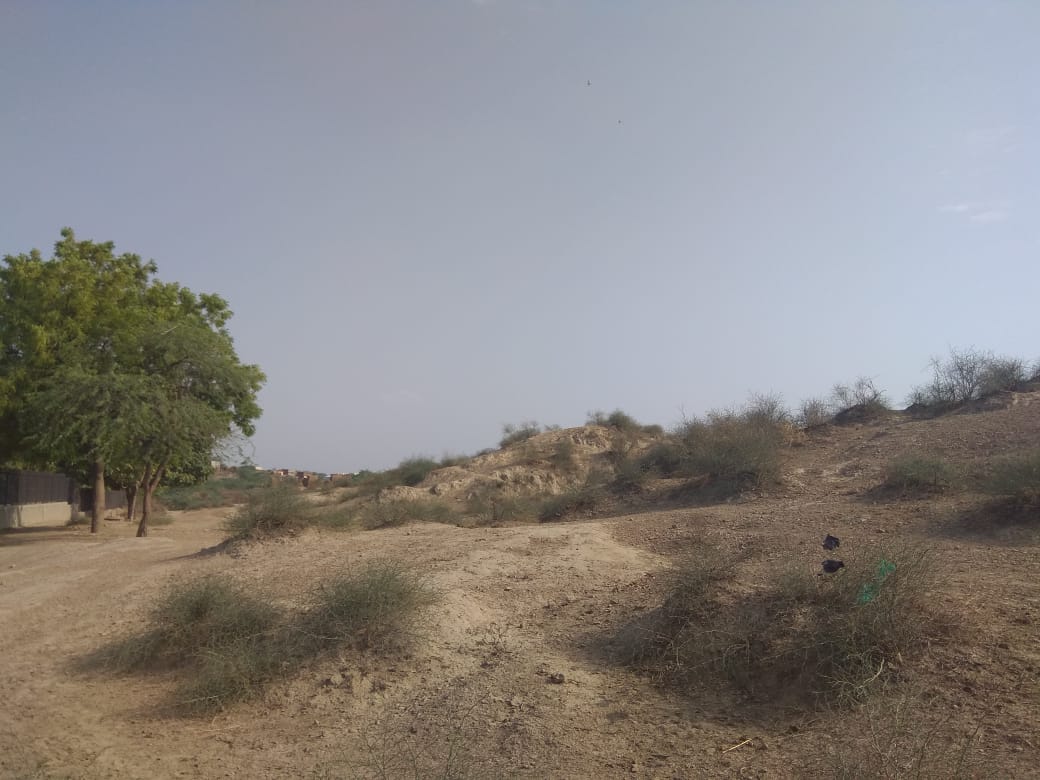
In January, two new mounds were found at Rakhigarhi. That is in Haryana, in India. The page says this Harappan site is now the largest one known. It is also called an Indus Valley site. It is now bigger than Mohenjo-daro, in Pakistan.
The page says the Harappan civilisation is one of the three oldest urban civilisations. The other two named are Egypt and Mesopotamia. The page says it is the least understood. Its script is yet to be deciphered. Knowledge of social structures and of life then is scant. The page says this site may change that, as finds go on.
The page says the site has an unbroken history of settlement. Early Harappan farming communities date from 6000 to 4500 BC. The Early Mature Harappan urbanisation phase dates from 4500 to 3000 BC. The Mature Harappan era dates from 3000 BC to a collapse around 1800 BC. The page calls that collapse mysterious. The page says this is more than 4,000 years of history in the soil.
Until the new mounds, experts believed another site was the largest. That was Mohenjo-daro, among about 2,000 sites. Those sites are in India, Pakistan, and Afghanistan. Its remains cover about 300 hectares. This site already had seven mounds. With two more, it now measures 350 hectares. Each new mound covers 25 hectares. One is east of the main site. One is west of it. Much of the mounds has been destroyed for cultivation.
Dr Shinde led the dig. He is a specialist in the Harappan civilisation. He said the new mounds have the same material as the main site. So they are part of it. On mound nine, the team saw burnt clay clots and circular furnaces. He said this indicated the industrial area.
Digs also found terracotta bangles and pottery pieces. They found a seal and a pot shard. Both carry the Harappan script. They found pot shards painted with geometric designs. They found terracotta animal figurines. The page says all of these belong to the Mature Harappan phase.
Five trenches showed residential rooms. They showed a bathroom with a soak jar, drainages, a hearth, and a platform. All were built with mud bricks. The page says the rest of the site still lies under the village of today. Several hundred houses stand on the old remains.
The page says ancient India in the Harappan era had one of the largest populations in the ancient world. That was far greater than the Middle East or Europe. The page says it had the largest number of cities of any region of the time. The page says the urban area was larger than Mesopotamia and Egypt put together. The page gives the reach as from the coast of Iran to Mumbai. It also gives it as from the Amu Darya River, in Afghanistan, to the Ganga in India.
What was found: two mounds, each of 25 hectares, plus objects from the Mature Harappan phase. Also mud-brick rooms, a bathroom with a soak jar, drainages, a hearth, and a platform. Where: Rakhigarhi, in Haryana, India. The new mounds lie east and west of the main site. When: the page says the mounds were found in January. The page does not give the year of that January, or the day. The article date is 30 March 2014.
From an Ancient Origins article by April Holloway, 30 March 2014.
In January, archaeologists found two new mounds at Rakhigarhi, an ancient site in Haryana, India. Ancient Origins reported the find on 30 March 2014. The report does not give the year of that January, or the day. Known.
Rakhigarhi belongs to the Harappan, or Indus Valley, civilisation. The report calls it one of the three oldest urban civilisations, with Egypt and Mesopotamia, and the least understood. Its script has not been deciphered, so no one can yet read its writing, and little is known about how its society worked. Known.
Seven mounds were already known at Rakhigarhi. The two new ones cover 25 hectares each, one to the east of the main site and one to the west. With them, the whole site measures 350 hectares. Until then, experts thought Mohenjo-daro, in Pakistan, was the largest of about 2,000 known Harappan sites in India, Pakistan and Afghanistan. Its remains cover around 300 hectares. Much of the mounds has been destroyed by farming. Known as the figures the report gives.
How do archaeologists know the new mounds belong to the same site? Dr Shinde, a specialist in the Harappan civilisation and director of the excavation, said they "have the same material as the main site", so they are part of it. On the surface of mound nine, the team saw burnt clay clots and circular furnaces. He said this showed it was the industrial area of the site. Known.
Digs at the new and older mounds found terracotta bangles, pieces of pottery, a seal and a pot shard both inscribed with the Harappan script, pot shards painted with geometric designs, and terracotta animal figurines. All belong to the Mature Harappan phase. Five trenches around the mounds showed homes: residential rooms, a bathroom with a soak jar, drains, a hearth and a platform, all built of mud bricks. The rest of the site still lies under the present-day village, with several hundred houses built on top of it. Known.
The report gives a long timeline for the site, with no break in settlement. Early Harappan farming communities lived there from 6000 to 4500 BC. An Early Mature Harappan phase of growing towns followed, from 4500 to 3000 BC. The Mature Harappan era of great cities lasted from 3000 BC until the civilisation's collapse around 1800 BC. That is more than 4,000 years. The report does not say how these dates were worked out. Known as the dates the report gives.
The report also says Harappan India had one of the largest populations of the ancient world, the most cities of any region at the time, and an urban culture bigger than Mesopotamia and Egypt together. It stretched from the coast of Iran to Mumbai, and from the Amu Darya River in Afghanistan to the Ganga in India. These are the report's own broad statements, not finds from this dig.
Two points are Debated. The first is size. The claim that Rakhigarhi is now bigger than Mohenjo-daro comes from Dr Shinde, who led the dig, and rests on adding the two new mounds to the seven already known. The report names no one who checked the figure or disagreed with it, and no outside expert view on it could be checked for this story. The second is the end of the cities. The report calls the collapse around 1800 BC "mysterious" and gives no cause. Researchers at the University of Cambridge have studied this question. In 2014 they reported that the summer monsoon weakened sharply about 4,100 years ago, causing a drought of around 200 years, just as the great Indus cities began to decline. Other causes have also been suggested, such as rivers changing course, a growing population, and invasion and conflict. The Cambridge archaeologist Cameron Petrie said it was "unlikely that there was a single cause". A 2023 Cambridge study found three long droughts in this dry period. Petrie called it "not a short-term crisis but a progressive transformation". Over about 200 years, large cities lost people as more lived in smaller villages, and farmers relied more on drought-tolerant millets. So many experts now see a gradual change linked to drought, rather than one sudden collapse. The question is still being studied.
Sources:
https://www.ancient-origins.net/news-history-archaeology/rakhigarhi-now-biggest-harappan-site-after-two-new-mounds-discovered-001500