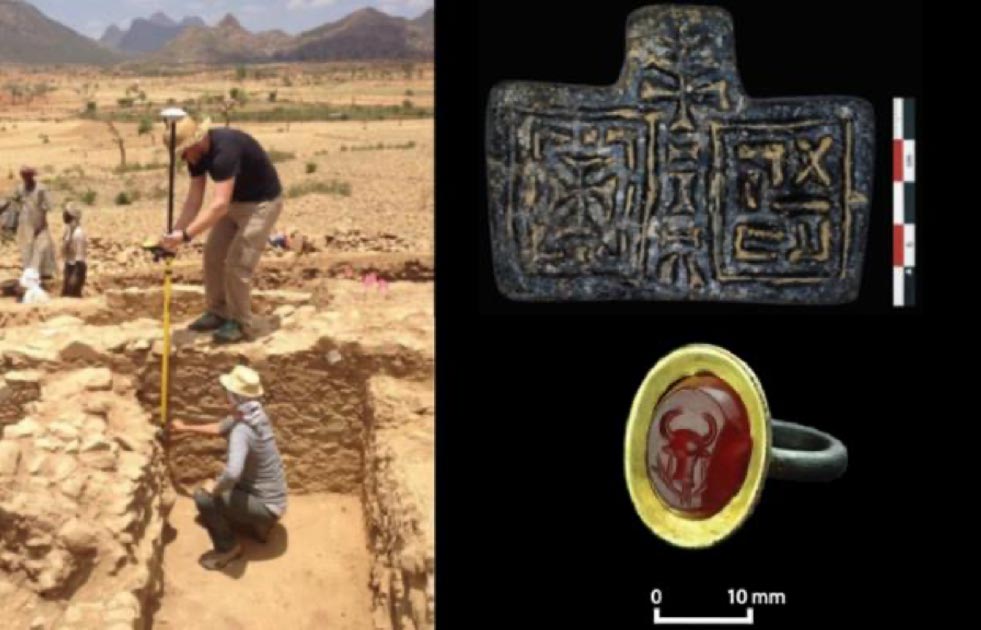
Debated. A gold ring was found in the buried town of Beta Samati.
Beta Samati is in the Yeha region of northern Ethiopia. The local name means "house of audience". People lived there from about 750 BC. It stayed important after the Aksumite kingdom became Christian, and it was left empty in 650 AD. Homes, workshops, and a church called a basilica were found there. The basilica is from the 4th century AD, and it is one of the oldest Aksumite Christian churches. The ring came from that basilica. It is gold, with a red stone called carnelian. The stone is carved with a bull's head. The shape of the ring looks Roman, but the bull's head is African.
The page says much of the Aksumite story is still a mystery.
https://www.ancient-origins.net/news-history-archaeology/aksumite-town-0012984