A boat sank 4,000 years ago. It went down in a channel of the Euphrates River. This was near the city of Uruk.
A team from Iraq and Germany found it in 2018. They were documenting the buffer zone around the ruins. Uruk is also called Warka. One part of the team was the Orient Department of the German Archaeological Institute. The other was the Iraqi German Mission of the State Board of Antiquities.
The boat was made of palm leaves, wood, and reed. It was then covered in bitumen. The page says bitumen is also called tar, or asphaltum. It is a semi-solid kind of petroleum. People used it on buildings. They also used it for waterproofing reed boats.
The boat is 7 metres (23 ft) long. It is 1.4 metres (4.59 ft) wide. Sediment buried it after it sank. The remains are fragile. They are also surprisingly well preserved. Part of the boat was visible above the ground. The palm leaves, wood, and reed have decomposed. Their imprint is still visible in the bitumen.
When it was found, the boat was photogrammetrically documented. It lay near road traffic. So the team did an emergency rescue dig, to protect it. They covered the top with a clay and plaster shell. That held it steady. They saved the whole boat.
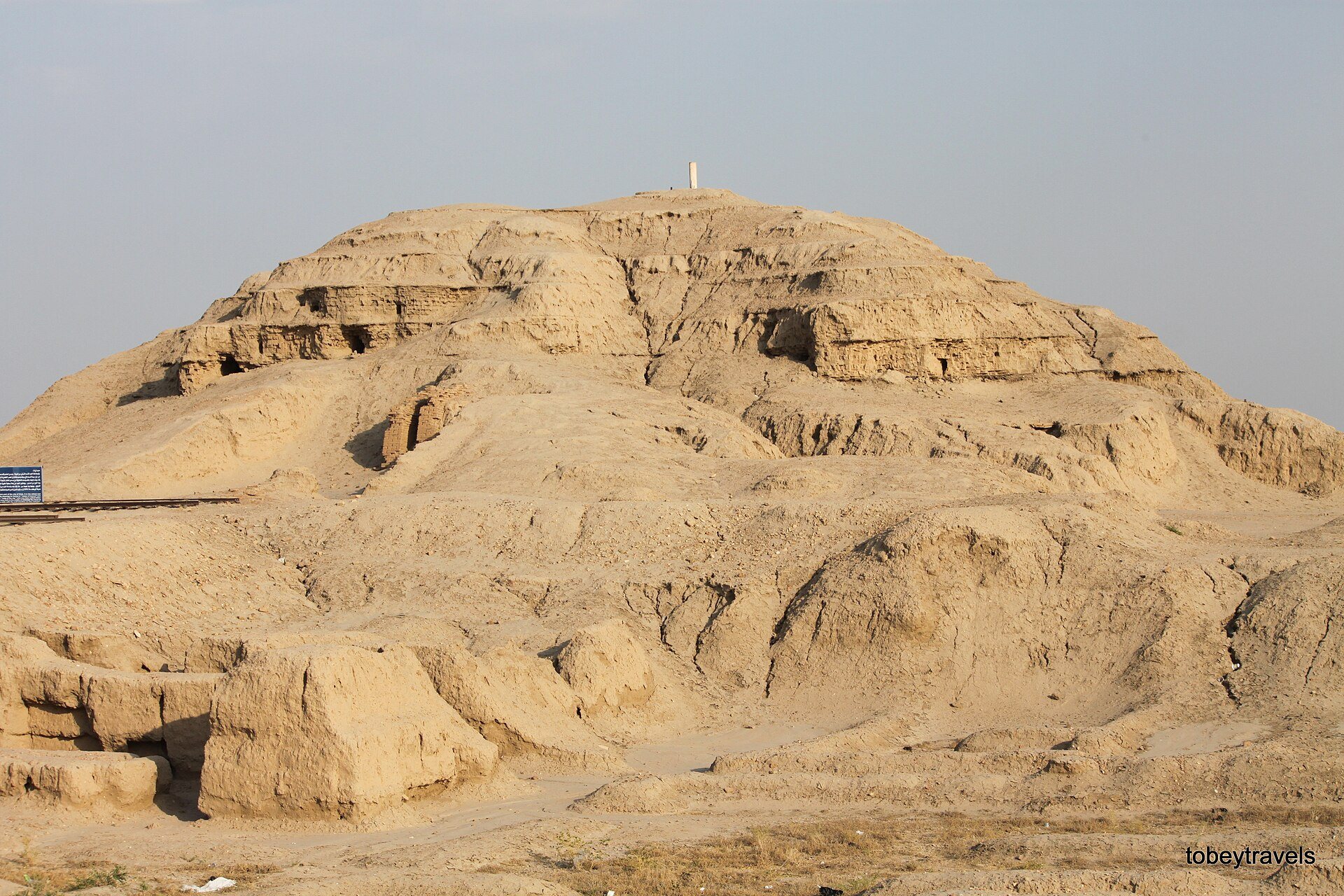
Today the ruins stand in a dusty desert, in the south of Iraq. They lie several kilometres east of the Euphrates as it is now. The page says this is 150 miles (241 km) south of Baghdad. The city was built next to a channel of the old river. That channel has dried up.
The page says Uruk was once the largest settlement in the south of Mesopotamia. The Greeks gave this land that name. The word means the land between rivers. The Euphrates is to the west. The Tigris is to the east. The page says some of the world’s oldest cities grew up here. They grew around water sources and irrigation projects.
The page says archaeologists believe Uruk is one of the world’s first cities. It has been remembered as a city of firsts. The page names the first real city. The page names the first example of architecture made in stone. The page names the home of the first ziggurat. The page names the place where writing originated. The page names the first city to create the cylinder seal.
The page says that by about 2900 BC, Uruk is believed to have held up to 80,000 people. They lived in a walled city of about 6 km2 (2.32 square miles). Life was based on fishing. People also herded cattle, sheep, and goats. They grew wheat, barley, apples, figs, and groves of date palms.
Over time the channel dried up. The main river moved farther away. The page says a period of constant warfare came next. Then came a devastating drought around 2250 BC. After that, Uruk declined. So did the south of Mesopotamia. The city stayed sparsely inhabited until the Islamic conquest of about 633 to 638 AD. Then it was abandoned.
William Loftus, a British explorer, dug here in the 1850s. He soon gave up. Since 1912, the German Archaeological Institute has led the work. The page says only a very small part of old Uruk has been excavated. Most of it is mud-brick. Until 1969, finds were often divided between foreign teams and Iraq.
The page says that in December 2021, Laith Majid Hussein spoke about training. He is director of the Iraqi State Board of Antiquities and Heritage. He spoke of European teams training Iraqi archaeologists. The page calls this boat dig one such project.
The boat has been transferred to the Iraq Museum in Baghdad. It is there for conservation and further study. The page says this follows current Iraqi antiquities laws.
What was found: a boat 7 metres long and 1.4 metres wide. It was made of palm leaves, wood, and reed, and covered in bitumen. Where: near Uruk, also called Warka, in the south of Iraq. It lay in a dry channel of the Euphrates. When: the boat sank 4,000 years ago. The team found it in 2018. The page does not give the day of the rescue dig. The article date is 8 April 2022.
From an Ancient Origins article by Cecilia Bogaard, 8 April 2022.
About 4,000 years ago, a boat sank to the bed of a channel of the Euphrates River. It went down near the ancient city of Uruk, in what is now southern Iraq. Sediment, the mud and silt carried by the river, then buried it. Known.
In 2018 a team of Iraqi and German archaeologists found it. They were recording the buffer zone, the protected land around the ruins of Uruk. Uruk is also called Warka in Arabic. The team came from the Orient Department of the German Archaeological Institute and the Iraqi German Mission of the State Board of Antiquities. Known.
The boat was 7 metres (23 ft) long and 1.4 metres (4.59 ft) wide. It was built from palm leaves, wood and reed, then coated in bitumen. Bitumen, also called tar or asphaltum, is a semi-solid kind of petroleum. In Mesopotamia people used it in buildings and to make reed boats waterproof. Over time the palm leaves, wood and reed have rotted away, but their imprint can still be seen in the bitumen. Known.
When it was found, the boat was photogrammetrically documented. That means it was recorded from many measured photographs. Parts of it had been exposed in recent years and could be seen above the ground. It also lay close to road traffic. So the team carried out an emergency rescue dig. They covered the top of the boat with a shell of clay and plaster to hold it steady. That way they saved the whole boat. The remains are fragile, but surprisingly well preserved. The boat has since gone to the Iraq Museum in Baghdad for conservation and further study. This follows current Iraqi antiquities laws. Known.
Why was there a boat in a desert? Today Uruk's ruins lie in dusty desert. They are several kilometres east of the Euphrates and about 241 km (150 miles) south of Baghdad. But the city was built beside a channel of the ancient river, which has since dried up. The main river has also shifted further away. The report links these changes to climate change. It quotes Apollo magazine on what the land was once like. Uruk was surrounded by freshwater reed marshes and rich river soil. Waterways led to nearby towns and to the Persian Gulf. Known as the report describes it.
The report calls Uruk the largest human settlement in southern Mesopotamia in its day. People lived by fishing and by herding cattle, sheep and goats. They grew wheat, barley, apples, figs and date palms. The Greeks named the region Mesopotamia, "the land between rivers". It lay between the Euphrates to the west and the Tigris to the east. After a period of constant warfare, a devastating drought struck around 2250 BC. Uruk, and all of southern Mesopotamia, then declined. The city stayed thinly inhabited until the Islamic conquest of about 633 to 638 AD, when it was abandoned. Known as the history the report gives.
The British explorer William Loftus dug at Uruk first, in the 1850s, but soon gave up. Since 1912 the German Archaeological Institute has led a long-term dig there. Only a very small part of Uruk has been dug so far, mostly mud-brick buildings. Until 1969 it was common for finds to be divided between foreign teams and Iraq. In December 2021, Laith Majid Hussein spoke about this work. He is director of the Iraqi State Board of Antiquities and Heritage. He said European teams were training Iraqi archaeologists in projects across the country. The report calls the boat dig one such project. Known.
The report says archaeologists "believe" Uruk is one of the world's first cities. It says Uruk "has been remembered" as a city of firsts: the first real city, the first architecture in stone, the first ziggurat, the place where writing began, and the first city to make the cylinder seal. By about 2900 BC, it says, Uruk "is believed" to have held up to 80,000 people in a walled city of about 6 square kilometres. These words show belief, not proof from this boat, so they are Debated. The Metropolitan Museum of Art in New York gives a careful expert view. It says that by around 3200 BC Uruk was "the largest settlement in southern Mesopotamia, if not the world". It was a true city of huge mud-brick buildings. It calls the simple pictographs drawn on clay tablets there "the precursors of later cuneiform writing". So the museum supports Uruk as a very early, very large city with a key part in the story of writing. It does not test every "first" on the list. The report also does not say how the boat was dated to 4,000 years ago.
Sources:
https://www.ancient-origins.net/news-history-archaeology/mesopotamian-boat-uruk-0016616